




Product Insights & Gear Guide
Why a Rope Training Halter Offers More Control and Clearer Communication

Feb
Groundwork is where many training challenges are either created—or solved. Whether you’re working on leading manners, responsiveness, or overall respect for pressure, the equipment you choose plays a quiet but important role.
That’s where a rope training halter comes in. Compared to traditional flat halters, rope halters are designed to offer clearer signals, more precise pressure, and better communication, especially during training sessions.
What Makes a Rope Training Halter Different?
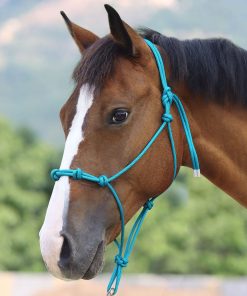
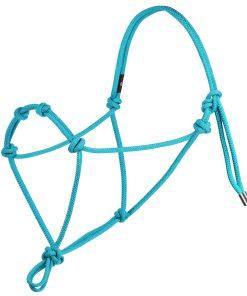
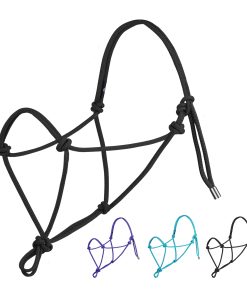
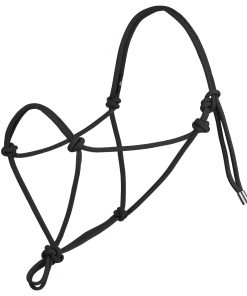
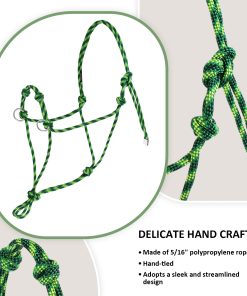
Unlike padded or wide webbing halters, a rope training halter is typically made from a single piece of rope and tied with strategically placed knots. There is usually no metal hardware, which keeps the halter lightweight and responsive.
According to groundwork and handling guidance shared by the American Association of Equine Practitioners (AAEP), horses learn through pressure and release—timing and clarity matter more than force.
👉 AAEP – Basic Horse Handling and Training Concepts
A rope halter helps deliver that clarity when used correctly.
Why 1/4″ Rope Matters in Training
The Harrison Howard Super Sturdy Horse Rope Training Halter is made with a 1/4” stiff halter cord, which strikes an important balance:
-
Strong with minimal stretch, so signals don’t get “lost”
-
Applies enough pressure to communicate clearly
-
Designed not to bite or cut into the horse when pressure is released
This diameter is commonly preferred in training situations because it allows for effective communication without unnecessary bulk.

The Role of Knots: Communication, Not Force
Rope halters use knots rather than hardware to create points of contact. These knots are not meant to cause discomfort—they’re designed to:
-
Focus pressure clearly
-
Encourage quicker understanding
-
Release immediately when the horse responds
This approach aligns with widely taught groundwork principles in professional horsemanship education, where pressure followed by immediate release helps horses understand what response is being asked. The concept of pressure-and-release is a foundational learning theory in horse training, emphasizing clarity, timing, and consistency rather than force.
👉 Pressure and release in horse training
When applied with correct timing, a rope training halter supports learning by clarifying cues instead of creating resistance.
Lightweight, Sturdy, and Purpose-Built
One of the advantages of this rope training halter is its construction from one continuous piece of strong rope. This design offers:
-
Lightweight feel for the horse
-
Fewer failure points compared to stitched halters
-
A clean, close fit that stays consistent
Because there’s no bulky hardware, the halter remains easy to handle during groundwork, leading, and training exercises.
Sized Tie Ring: Practical and Intentional
Instead of traditional buckles, this halter features a sized tie ring designed specifically for clipping a lead rope. This approach:
-
Keeps the halter simple and lightweight
-
Allows quick attachment of the lead rope
-
Avoids unnecessary metal against the horse’s face
The halter comes in Standard size, suitable for most standard-sized horses. As with any training equipment, measuring your horse and checking fit is always recommended before use.

When a Rope Training Halter Is Most Useful
A rope training halter is particularly effective for:
-
Groundwork and in-hand training
-
Teaching leading manners
-
Desensitization and responsiveness exercises
-
Clear pressure-and-release training
Many professional trainers use rope halters as a training tool, then switch to other halters for turnout or tying.
For riders building a groundwork setup, this style of halter pairs naturally with other training essentials.
👉 Explore Harrison Howard horse halters & training gear
https://hhequestrian.com/halters/
Important Reminder: Training Tool, Not Turnout Gear
It’s important to note that rope halters are not designed for turnout or unsupervised wear. Because of their thinner rope and knot-based construction, they should be used intentionally for training and removed afterward to reduce safety risks.
This guidance aligns with general horse care and safety recommendations shared by established equestrian organizations, such as the British Horse Society, which emphasize using appropriate equipment for its intended purpose.
👉 Horse care and safety advice
Final Thoughts
A rope training halter is not about using more force—it’s about delivering clearer communication. When designed well, with the right rope diameter, knot placement, and lightweight construction, it becomes a precise and effective training aid.
The Harrison Howard Super Sturdy Horse Rope Training Halter is built for riders who value simplicity, durability, and clarity during groundwork—helping horse and handler communicate more effectively, one step at a time.
FAQ: Rope Training Halters
Is a rope training halter suitable for beginners?
Yes, but proper instruction is important. Timing and release matter more than strength when using a rope halter.
Can I use a rope halter for tying or turnout?
Rope halters are best reserved for supervised training and groundwork, not turnout or long-term tying.
Why choose a 1/4″ rope instead of thicker rope?
A 1/4″ rope provides clearer pressure and faster release, making communication more precise during training.
read more

Why a Rope Training Halter Offers More Control and Clearer Communication
A rope training halter can improve clarity, control, and communication during groundwork. Here’s how it [...]
Feb

The Different Types of Horse Fly Masks and Their Benefits
Learn about the different types of horse fly masks available, how they benefit horses with [...]
Feb

Can a Horse Fly Mask Help Horses With Eye Conditions?
A horse fly mask can support comfort for horses with eye conditions by reducing irritation [...]
Feb

7 Training and Riding Tips to Improve Balance, Confidence, and Performance
These training and riding tips help riders improve balance, communication, and confidence while supporting horse [...]
Jan

Why Fly Masks for Horses Are Crucial for Comfort and Health
Learn why fly masks for horses are an essential tool for protecting your horse from [...]
Jan

Why Knee-High Riding Socks Matter in Cold Weather
Knee-high riding socks are more than a winter accessory — they protect warmth, improve boot [...]
Jan

Women’s Full-Seat Silicone Breeches: Comfort, Grip & Style for Everyday Riding
Women’s full-seat silicone breeches have become a go-to choice for modern riders. This guide explains [...]
Jan

5 Smart Reasons to Choose a Women’s Equestrian Riding Jacket for Cold-Weather Rides
A women’s equestrian riding jacket should offer more than warmth. From flexible thermal fabric to [...]
Jan
