





Horse Care & Stable Life
Practical Stable Tips (Straight from the Horses… if they could talk)
Jan
Stable life looks peaceful from the outside — soft hay, shiny coats, horses munching like professional food critics.
But behind the scenes, good care is a science.
Here are five essential, veterinarian-approved tips explained in a way your horse might approve of — calm, professional, and just a little cheeky.
1. Fresh Water Isn’t Optional — It’s Physiology
Horses can drink 25–40 liters a day. Clean water supports digestion, temperature control, and greatly reduces colic risk.
Professional tips
- Replace water daily and scrub buckets often
- In winter: check for ice (cold water is fine, frozen water is hydration theater)
- In summer: refill more frequently — horses sweat like marathon runners
If the water smells like a science experiment, your horse is absolutely judging you.
2. Clean Stalls Keep Lungs and Hooves Healthy
Ammonia buildup irritates the respiratory system and damp bedding creates bacteria and hoof problems.
Professional tips
- Muck daily
- Keep bedding dry and well-spread
- Ensure ventilation — fresh air is good, windstorm-in-the-barn is not
Horses don’t ask for interior design, just breathable air and clean floors.
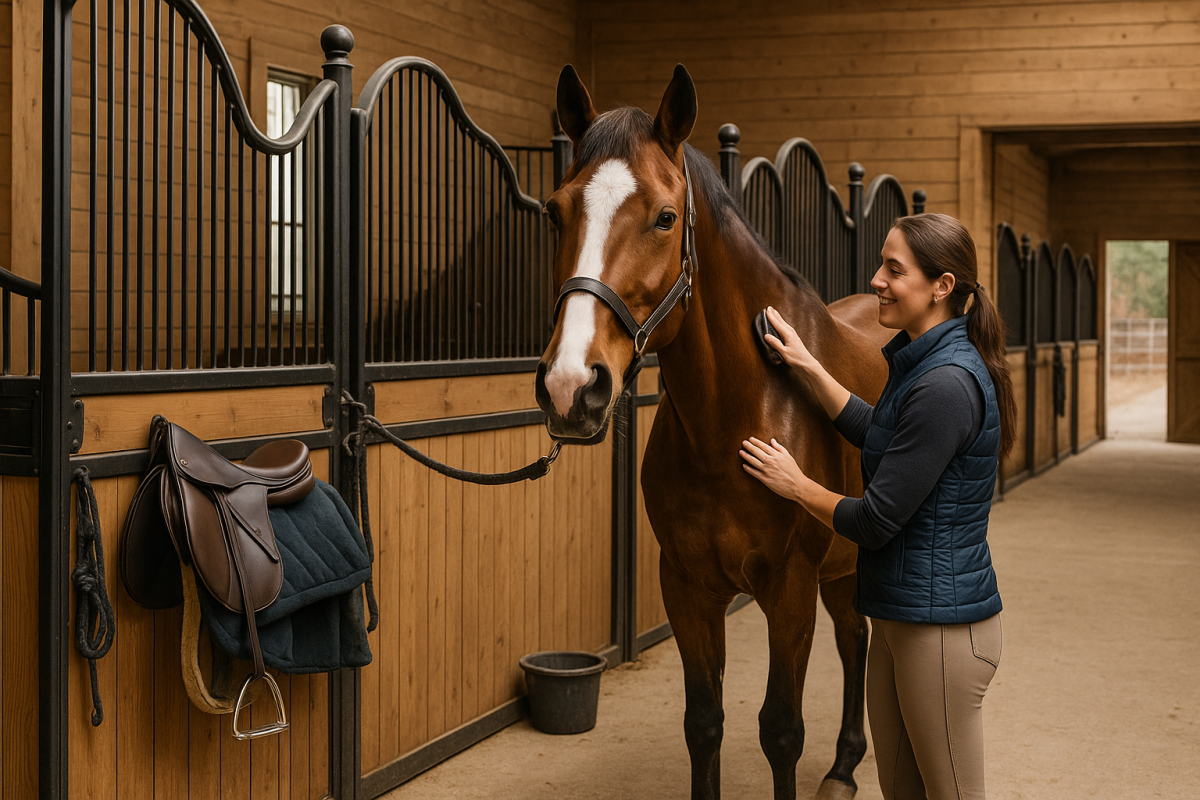
3. Grooming = Health Check + Spa Day
Grooming boosts circulation, removes dirt, and helps detect skin irritation or swelling early.
Professional tips
- Curry comb to loosen dirt
- Body brush to smooth and shine
- Check for bumps, heat, scratches, or ticks
- Don’t ignore tails — knots are not a personality trait
Also: well-groomed horses earn 87% more compliments (unofficial, but universally believed).
4. Hoof Care Matters More Than Humans Think
“No hoof, no horse” is a real saying for a reason — lameness can develop fast.
Professional tips
- Pick hooves daily
- Farrier visit every 6–8 weeks
- Watch for thrush (black, smelly, unmistakable), cracks, or heat
- Dry stalls reduce infections
Hooves are like high-performance engineering. Treat them like it.
5. Ventilation: Silent but Essential
Good airflow reduces dust, ammonia, and respiratory stress.
Professional tips
- Keep stable air moving gently
- Avoid dusty bedding or old hay
- Don’t shut every window just because you are cold
- Use fans safely — horses + loose wires = bad physics
Horses tolerate cold far better than stale, stuffy air. Their winter coats are impressive technology.
Final Thought
Great care is about habits: fresh water, clean stalls, grooming, hoof checks, and breathable air.
When horses feel good, they move better, learn better, and enjoy life more — and that’s the heart of true partnership.
Every stride, defined by trust — and a well-run stable.
